Tag Archives: satellite

Mapping the Earth’s Continents: Discovering Their Shape Before Satellites

Introduction:
Long before the advent of satellite technology, explorers, cartographers, and scientists embarked on remarkable journeys to map and understand the shape of our planet’s continents. This article delves into the fascinating history of how the shape of continents was determined before the era of satellites, highlighting the innovative methods and discoveries that shaped our understanding of Earth’s land masses.

  1. Early Explorations and Mapping:
    Early explorers and navigators, such as Christopher Columbus and Ferdinand Magellan, played significant roles in mapping the continents. Their voyages, fueled by curiosity and the pursuit of new trade routes, led to the discovery and initial mapping of various land masses. These expeditions laid the foundation for further exploration and mapping endeavors.
  2. Ground Surveys and Trigonometry:
    Ground surveys became a crucial method for mapping continents before satellites. Surveyors employed sophisticated tools and techniques, including trigonometry, to measure distances and angles. By meticulously measuring points and using triangulation, they were able to create accurate maps depicting the shape and boundaries of continents.
  3. Celestial Observations:
    Astronomical observations played a vital role in mapping the continents. Early astronomers used celestial events, such as solar eclipses, to determine latitude and longitude, which were critical for mapping Earth’s surface. These observations, combined with precise timekeeping, allowed for the creation of more accurate maps and charts.
  4. Cartographic Innovations:
    Advancements in cartography, the science of mapmaking, contributed to our understanding of continent shapes. Cartographers incorporated information from explorers, ground surveys, and celestial observations into their maps. They refined map projections and employed techniques to minimize distortions, resulting in more accurate depictions of continental shapes.
  5. Underwater Topography:
    Determining the shape of continents wasn’t limited to land exploration. Scientific expeditions equipped with sonar technology explored the depths of the oceans, revealing the underwater topography and the contours of continental shelves. These findings provided valuable insights into the connection between landmasses and oceanic features.
  6. Satellite-Aided Surveys:
    While satellites were not available during the early exploration and mapping eras, it’s worth noting that later advancements in satellite technology significantly enhanced our understanding of continents. Satellites equipped with remote sensing instruments allowed for comprehensive mapping of Earth’s surface, capturing detailed imagery and generating accurate topographic data.

Conclusion:
Before satellites revolutionized the way we observe and map our planet, determined explorers, meticulous surveyors, and visionary cartographers undertook incredible efforts to understand the shape of continents. Through ground surveys, celestial observations, and cartographic innovations, they pieced together the intricate puzzle of Earth’s land masses. While satellites have undoubtedly provided unprecedented insights and precision, the foundation of our knowledge about continent shapes was established by the intrepid explorers and skilled scientists who preceded them. Their remarkable contributions paved the way for the advancements that continue to shape our understanding of the Earth’s continents today.

Why don’t satellites crash into each other?

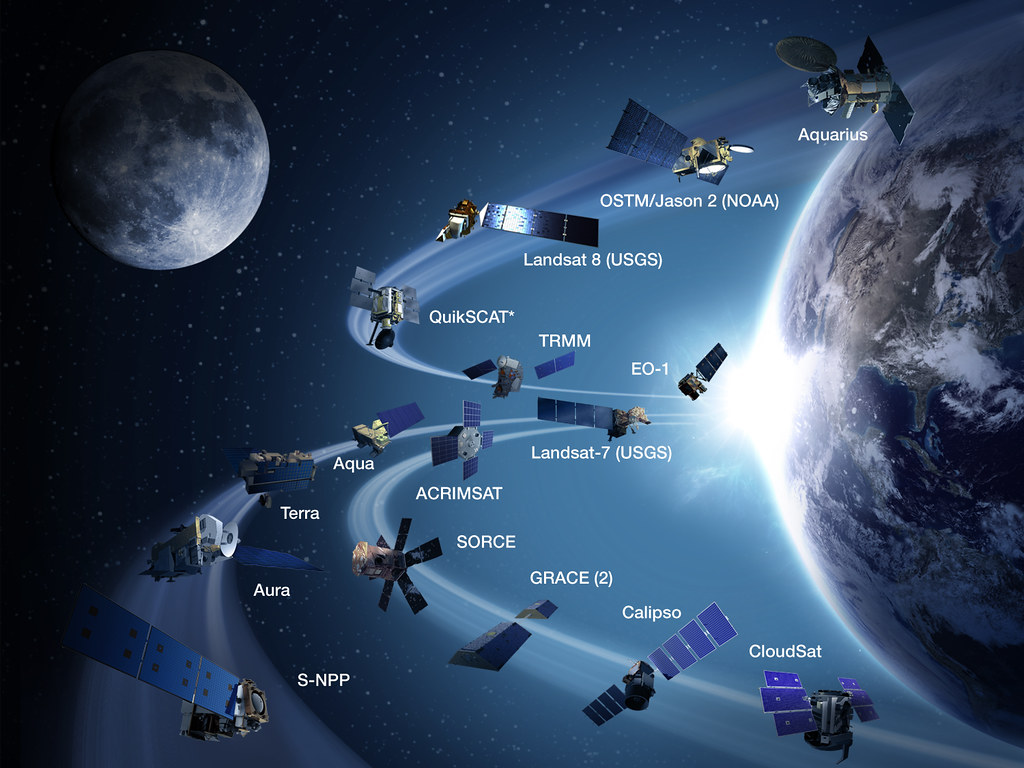
Satellites are carefully tracked and monitored to minimize the risk of collisions in space. Here are some reasons why satellites generally do not crash into each other:

  1. Vastness of Space: Space is vast, with an enormous volume available for satellite deployment. The actual physical size of satellites in orbit is relatively small compared to the vast distances between them, reducing the likelihood of accidental collisions.
  2. Orbit Allocation and Regulations: International organizations, such as the International Telecommunication Union (ITU) and national space agencies, allocate specific orbital slots and frequencies to satellites. These regulations help ensure proper spacing between satellites and minimize the risk of collisions.
  3. Precise Orbit Determination: Satellites have precise orbital information, including their position, velocity, and altitude. This data is continuously monitored by ground-based tracking systems, which calculate and predict their future paths. By accurately tracking satellites, collision risks can be identified and mitigated.
  4. Collision Avoidance Maneuvers: If there is a potential risk of collision between satellites, operators can perform collision avoidance maneuvers to alter the satellite’s orbit and avoid the impending collision. These maneuvers involve adjusting the satellite’s speed or trajectory to create a safe separation distance.
  5. Space Traffic Management: Space agencies and organizations collaborate to implement space traffic management (STM) practices. This includes sharing satellite tracking data, coordinating satellite operations, and providing collision warning notifications to operators. STM helps mitigate collision risks and enhances the overall safety of satellite operations.
  6. Design Considerations: Satellites are designed with collision avoidance in mind. They often have features like propulsion systems for orbital adjustments, debris shields for protection against small objects, and reflective surfaces to enhance visibility for tracking systems.
  7. Debris Mitigation: The growing concern of space debris has led to initiatives to mitigate its creation. Satellites are designed to minimize the generation of debris during operations. At the end of their operational life, satellites are either deorbited to burn up in the Earth’s atmosphere or moved to a graveyard orbit to reduce the risk of collisions with active satellites.

While these measures significantly reduce the risk of satellite collisions, the increasing number of satellites in orbit, particularly in popular orbital regions, poses new challenges. The ongoing development of advanced tracking technologies, international cooperation, and improved space traffic management are vital to ensuring the long-term sustainability of satellite operations and minimizing the risk of collisions in space.

Satellite

How does a satellite orbit without falling into the Earth?

A satellite orbits the Earth without falling into it due to a balance between the gravitational force pulling it inward and its forward velocity. This balance is maintained through the principle of centripetal force and the concept of orbital mechanics. Here’s a simplified explanation:

  1. Gravitational Force: The Earth’s gravity pulls objects toward its center. The force of gravity decreases with distance but is still significant at the altitude where satellites orbit.
  2. Centripetal Force: Centripetal force is the force that pulls an object toward the center of a circular path. In the case of a satellite, it is the force that keeps it in orbit. The centripetal force required for the satellite’s orbit is provided by the gravitational force.
  3. Forward Velocity: Satellites are launched into space with enough horizontal velocity to counteract the pull of gravity. This velocity allows them to continually fall toward the Earth but also move forward fast enough that they keep missing it.
  4. Balance of Forces: When a satellite is launched into its orbit, the forward velocity is precisely calculated to create a balance between the gravitational force pulling it inward and the centripetal force pulling it outward. This balance ensures that the satellite follows a stable and continuous orbit.
  5. Newton’s Laws of Motion: Newton’s laws, specifically the first and second laws of motion, govern the behavior of objects in space. The first law states that an object in motion stays in motion with the same speed and direction unless acted upon by an external force. The second law explains the relationship between force, mass, and acceleration.
  6. Conservation of Angular Momentum: Satellites also maintain their orbits through the conservation of angular momentum. Angular momentum is a property that depends on an object’s mass, velocity, and distance from the center of rotation. By maintaining a specific distance and velocity, the satellite’s angular momentum remains constant, ensuring its stability in orbit.

Overall, a satellite stays in orbit around the Earth by balancing the gravitational force pulling it inward and its forward velocity. This delicate balance allows the satellite to continuously fall toward the Earth but also move forward at a sufficient speed to remain in orbit without falling into the planet.

Satellite & Freeview