

Tag Archives: technology

Achieving the Perfect View: The Art of TV Mounting

Finding the optimal height for mounting your TV is crucial to enhancing your overall viewing experience. After all, who wouldn’t want to enjoy their favorite shows and movies in the most comfortable way possible? Let’s delve into the details.

In the world of home entertainment, the placement of your TV plays a pivotal role in the immersive experience it provides. Experts unanimously agree that mounting your TV at eye level while seated is the golden rule. For the average person, this means the center of the screen should be approximately 42 inches from the floor.

Why Eye Level Matters:

  1. Comfort is Key: Mounting your TV at eye level ensures that you won’t have to strain your neck or eyes while watching. This is particularly important for those long movie nights or binge-watching sessions.
  2. Optimal Viewing Angle: Placing the TV at eye level allows for a more natural and comfortable viewing angle. You can enjoy a broader range of colors and details without constantly adjusting your position.
  3. Aesthetics and Room Harmony: Beyond the technical aspects, mounting your TV at the right height contributes to the overall aesthetics of your room. It blends seamlessly with your furniture and enhances the visual appeal of your living space.

How to Measure and Mount:

  1. Sit on Your Sofa: Start by sitting on your sofa or preferred seating area. This is where you’ll be spending most of your time watching TV.
  2. Eye Level Measurement: Measure the height from the floor to your eyes while sitting comfortably. The center of your TV screen should align with this measurement.
  3. Mounting Options: Depending on your room setup, you can choose between fixed, tilting, or articulating mounts. Fixed mounts keep the TV in a stationary position, while tilting and articulating mounts offer flexibility for different viewing angles.
  4. Professional Installation: If you’re not confident in your DIY skills, consider hiring a professional to ensure a secure and precise installation.

Remember, achieving the perfect TV height is a personalized journey. Take into account the unique characteristics of your room, furniture, and personal preferences. With your engineering background, you might even find joy in the technical precision of the installation process.

Investing time and effort into mounting your TV correctly is a small yet impactful step towards creating a home entertainment haven. So, go ahead, adjust that TV height, and elevate your viewing experience to new heights!

Happy watching,
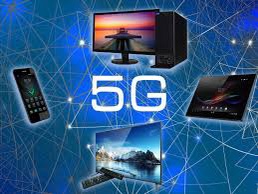
Unlocking the Power of 5G: Revolutionizing Connectivity and Communication


The advent of 5G technology has brought about a monumental shift in the world of connectivity and communication. With its promise of ultra-fast speeds, low latency, and massive device connectivity, 5G is poised to transform various industries and reshape the way we live, work, and interact. In this article, we will explore the power of 5G and delve into its potential to revolutionize our digital landscape.

  1. Unprecedented Speed and Bandwidth:
    One of the most significant advantages of 5G is its unprecedented speed and bandwidth capabilities. With speeds up to 100 times faster than 4G, 5G enables lightning-fast downloads, seamless streaming of high-quality content, and near-instantaneous data transfers. This breakthrough in speed empowers users to enjoy immersive virtual reality experiences, engage in real-time gaming, and access bandwidth-intensive applications without any lag or buffering.
  2. Enhanced Connectivity and IoT Integration:
    5G’s robust connectivity capabilities pave the way for the Internet of Things (IoT) to thrive on a massive scale. With its ability to handle a massive number of devices simultaneously, 5G enables seamless integration of IoT devices, creating smart cities, intelligent transportation systems, and efficient industrial automation. From smart homes to connected cars, 5G unlocks a new era of interconnectedness, enabling efficient data exchange, real-time monitoring, and advanced automation.
  3. Empowering Industry Transformations:
    The impact of 5G extends far beyond consumer experiences. Industries such as healthcare, manufacturing, transportation, and entertainment are poised to undergo transformative changes. In healthcare, 5G facilitates remote surgeries, telemedicine, and real-time patient monitoring, bringing medical expertise to remote areas and improving healthcare access. In manufacturing, 5G enables the implementation of smart factories, where autonomous robots and machines communicate and collaborate seamlessly. The entertainment industry can leverage 5G for immersive augmented reality experiences, live streaming of high-quality content, and personalized entertainment recommendations.
  4. Enabling Autonomous Vehicles and Smart Cities:
    The deployment of 5G networks is a significant milestone for the development of autonomous vehicles and smart cities. With its low latency and high reliability, 5G enables real-time communication between vehicles, traffic infrastructure, and pedestrians, making transportation safer and more efficient. Smart cities leverage 5G to optimize energy consumption, manage waste and resources, enhance public safety, and deliver improved public services. The combination of 5G, AI, and IoT technologies creates a robust ecosystem for the realization of futuristic urban environments.
  5. Unlocking Innovation and Economic Growth:
    The widespread adoption of 5G fosters innovation and economic growth. It provides a fertile ground for startups, entrepreneurs, and developers to create and deploy cutting-edge applications, services, and solutions. The high-speed connectivity and low latency of 5G spur advancements in areas such as virtual reality, augmented reality, artificial intelligence, and edge computing. This technological progress fuels economic growth, job creation, and digital transformation across industries.

Conclusion:
5G technology represents a transformative leap in connectivity and communication. Its blazing-fast speeds, enhanced connectivity, and massive device capacity open up new possibilities for individuals, businesses, and societies as a whole. With its potential to revolutionize industries, enable autonomous systems, and drive economic growth, 5G is set to shape our future in profound ways. As we unlock the power of 5G, we embark on a journey towards a hyper-connected world where innovation knows no bounds and communication reaches unprecedented levels of speed and efficiency.

Artificial Intelligence (AI): Transforming Industries and Enhancing Human Potential


Artificial Intelligence (AI) is no longer just a concept from science fiction; it has become a transformative force across industries, revolutionizing the way we work, communicate, and live. With its ability to analyze vast amounts of data, learn from patterns, and make intelligent decisions, AI is reshaping traditional processes and unlocking new possibilities. In this article, we will explore how AI is transforming various industries and harnessing its potential to enhance human capabilities.

  1. AI in Healthcare:
    AI is revolutionizing healthcare by enabling faster and more accurate diagnostics, personalized treatment plans, and predictive analytics. Machine learning algorithms can analyze medical records, genomic data, and imaging scans to assist in disease detection, drug discovery, and treatment optimization. AI-powered virtual assistants are also improving patient care by providing real-time support and personalized healthcare advice.
  2. AI in Finance:
    In the financial industry, AI is streamlining operations, detecting fraud, and optimizing investment strategies. AI algorithms can analyze vast amounts of financial data in real-time, making predictions and identifying patterns that humans might miss. Chatbots and virtual assistants powered by natural language processing are enhancing customer service and enabling personalized financial advice.
  3. AI in Manufacturing:
    AI is revolutionizing manufacturing processes by enabling automation, predictive maintenance, and quality control. AI-powered robots and machines can perform complex tasks with precision and efficiency, improving productivity and reducing costs. Predictive analytics can anticipate equipment failures and optimize maintenance schedules, minimizing downtime and increasing operational efficiency.
  4. AI in Transportation:
    The transportation industry is being transformed by AI-powered solutions, including self-driving cars, intelligent traffic management systems, and logistics optimization. Autonomous vehicles equipped with AI algorithms can enhance road safety, reduce congestion, and improve fuel efficiency. AI-powered route optimization algorithms are also revolutionizing logistics and supply chain management, improving delivery times and reducing costs.
  5. AI in Customer Service:
    AI-powered chatbots and virtual assistants are transforming customer service by providing personalized and efficient support. Natural language processing algorithms enable chatbots to understand and respond to customer inquiries, providing real-time assistance and reducing wait times. AI-powered sentiment analysis can also gauge customer satisfaction and identify areas for improvement in products and services.

Conclusion:
Artificial Intelligence is not just a buzzword; it is reshaping industries and revolutionizing the way we live and work. Its ability to process and analyze vast amounts of data, make intelligent decisions, and learn from patterns is driving innovation and enhancing human potential across various sectors. As AI continues to evolve, its impact on industries will only grow, unlocking new opportunities and transforming the way we approach challenges and solve problems. Embracing AI technologies and harnessing their potential will be crucial for organizations and individuals to thrive in the digital age.