Tag Archives: breaking news

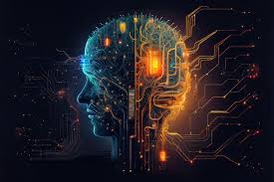
Artificial Intelligence (AI): Transforming Industries and Enhancing Human Potential


Artificial Intelligence (AI) is no longer just a concept from science fiction; it has become a transformative force across industries, revolutionizing the way we work, communicate, and live. With its ability to analyze vast amounts of data, learn from patterns, and make intelligent decisions, AI is reshaping traditional processes and unlocking new possibilities. In this article, we will explore how AI is transforming various industries and harnessing its potential to enhance human capabilities.
  1. AI in Healthcare:
    AI is revolutionizing healthcare by enabling faster and more accurate diagnostics, personalized treatment plans, and predictive analytics. Machine learning algorithms can analyze medical records, genomic data, and imaging scans to assist in disease detection, drug discovery, and treatment optimization. AI-powered virtual assistants are also improving patient care by providing real-time support and personalized healthcare advice.
  2. AI in Finance:
    In the financial industry, AI is streamlining operations, detecting fraud, and optimizing investment strategies. AI algorithms can analyze vast amounts of financial data in real-time, making predictions and identifying patterns that humans might miss. Chatbots and virtual assistants powered by natural language processing are enhancing customer service and enabling personalized financial advice.
  3. AI in Manufacturing:
    AI is revolutionizing manufacturing processes by enabling automation, predictive maintenance, and quality control. AI-powered robots and machines can perform complex tasks with precision and efficiency, improving productivity and reducing costs. Predictive analytics can anticipate equipment failures and optimize maintenance schedules, minimizing downtime and increasing operational efficiency.
  4. AI in Transportation:
    The transportation industry is being transformed by AI-powered solutions, including self-driving cars, intelligent traffic management systems, and logistics optimization. Autonomous vehicles equipped with AI algorithms can enhance road safety, reduce congestion, and improve fuel efficiency. AI-powered route optimization algorithms are also revolutionizing logistics and supply chain management, improving delivery times and reducing costs.
  5. AI in Customer Service:
    AI-powered chatbots and virtual assistants are transforming customer service by providing personalized and efficient support. Natural language processing algorithms enable chatbots to understand and respond to customer inquiries, providing real-time assistance and reducing wait times. AI-powered sentiment analysis can also gauge customer satisfaction and identify areas for improvement in products and services.

Conclusion:
Artificial Intelligence is not just a buzzword; it is reshaping industries and revolutionizing the way we live and work. Its ability to process and analyze vast amounts of data, make intelligent decisions, and learn from patterns is driving innovation and enhancing human potential across various sectors. As AI continues to evolve, its impact on industries will only grow, unlocking new opportunities and transforming the way we approach challenges and solve problems. Embracing AI technologies and harnessing their potential will be crucial for organizations and individuals to thrive in the digital age.

The Revolution of Fiber Optics: Unveiling the Power of Light

Fibre Optic
Fibre optic


In the digital age, the transmission of information at lightning speed is crucial for our interconnected world. Enter fiber optics – a game-changing technology that has revolutionized the way we transmit data, voice, and video. In this article, we will delve into the world of fiber optics, exploring its fundamental principles, applications, and the impact it has had on various industries.

  1. Understanding Fiber Optics:
    Fiber optics is a technology that utilizes thin strands of glass or plastic, called optical fibers, to transmit information in the form of light pulses. These fibers are designed to carry a vast amount of data over long distances, with minimal loss and high speed. The core principle behind fiber optics lies in the concept of total internal reflection, where light is trapped and guided along the fiber’s length.
  2. Advantages of Fiber Optics:
    a. Speed and Bandwidth: Fiber optics enables incredibly high data transmission speeds, providing bandwidth that far surpasses traditional copper-based systems. It can transmit large volumes of data in a fraction of a second, making it ideal for bandwidth-intensive applications like streaming, cloud computing, and online gaming.

b. Long-Distance Transmission: Unlike copper wires, which are limited in their transmission distance, fiber optics can carry signals over much longer distances without significant signal degradation. This makes it ideal for long-haul communication networks, connecting cities, countries, and even continents.

c. Immunity to Interference: Fiber optic cables are immune to electromagnetic interference, making them highly reliable in environments prone to electrical disturbances. They are not affected by nearby power lines, radio frequencies, or other sources of electromagnetic noise, ensuring consistent and clear transmission.

d. Security: Fiber optics offers enhanced security for data transmission. Unlike traditional copper cables that can be tapped or intercepted, fiber optic signals are difficult to tap without causing noticeable signal degradation, making them more secure for sensitive information transfer.

  1. Applications of Fiber Optics:
    a. Telecommunications: Fiber optics has transformed the telecommunications industry, serving as the backbone for high-speed internet connections, telephone networks, and cable television. It enables seamless communication and supports the increasing demand for data-intensive applications.

b. Healthcare: Fiber optics plays a crucial role in medical imaging, such as endoscopy and optical coherence tomography (OCT), allowing for non-invasive and precise visualization of internal organs and tissues. It also facilitates remote surgery and telemedicine, connecting healthcare professionals in real-time for consultation and diagnosis.

c. Data Centers: With the exponential growth of data storage and processing, fiber optics is the preferred choice for interconnecting data centers. It enables fast and reliable data transfer between servers, contributing to the efficiency and performance of cloud computing and other data-intensive applications.

d. Industrial and Defense Applications: Fiber optics finds applications in industries such as oil and gas, aerospace, and defense. It is used for remote sensing, structural health monitoring, secure communication, and high-speed data transfer in harsh environments.

Conclusion:
Fiber optics has ushered in a new era of high-speed, reliable, and secure communication. Its impact spans across industries, transforming the way we connect, communicate, and share information. As technology continues to advance, fiber optics will play an increasingly pivotal role in shaping the future of our interconnected world, empowering us with faster, more efficient, and safer data transmission capabilities.

Note: This article provides a general overview of fiber optics and its applications. For more in-depth information or technical details, further exploration and research are recommended.